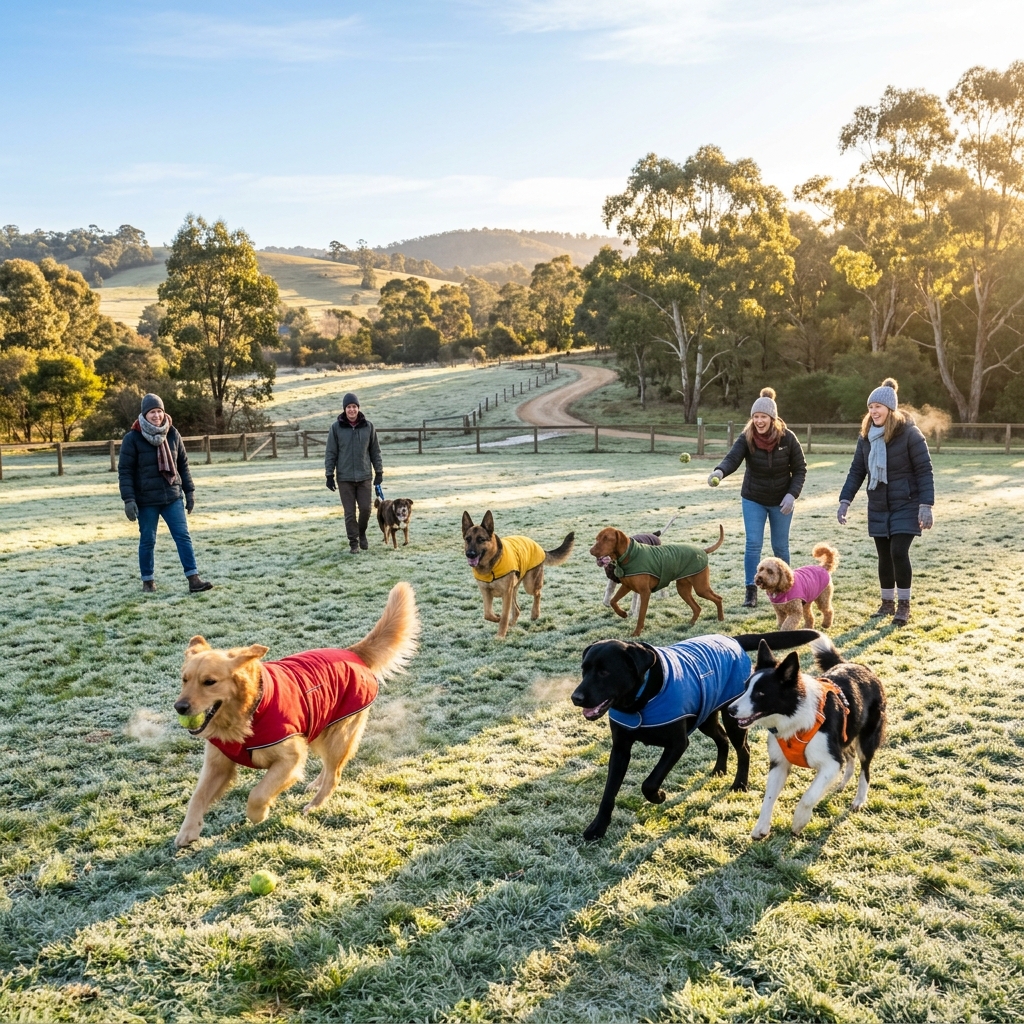
Australian winters are mild compared to much of the world — but they still bring cold mornings, wet weather, and mud that changes the dog park experience significantly. This guide covers everything you need to know about visiting dog parks in winter in Australia.
Best Time to Visit Dog Parks in Winter
Unlike summer — where early morning and late evening are the safest times — winter flips the equation:
- Mid-morning (10am–noon): Frost has cleared, ground has had time to dry slightly, temperatures are at their comfortable peak. This is the winter sweet spot
- Avoid immediately after overnight rain: Parks become extremely muddy, and wet dogs track mess everywhere
- Avoid early morning frost: Frozen grass is slippery and can cause muscle strains, particularly in older dogs
Cold Weather Considerations
Does My Dog Need a Coat?
Most healthy adult dogs with a full coat do not need additional clothing in Australian winters. Exceptions include:
- Short-coated breeds: Greyhounds, whippets, chihuahuas, Staffordshire bull terriers
- Very small dogs under 5kg
- Elderly dogs or dogs with arthritis
- Recently groomed or clipped dogs
- Dogs with health conditions affecting their ability to thermoregulate
If your dog is shivering, hunched over, or reluctant to move — they're too cold. Head home.
Warm-Up Before Play
Cold muscles are more prone to strains and tears. In winter, let your dog walk at a relaxed pace for 5–10 minutes before allowing vigorous running or jumping. This is especially important for older dogs.
Managing Mud at Dog Parks
Mud is the defining challenge of winter dog parks. Practical tips:
- Keep a dedicated "park towel" in your car — dry paws and belly before getting in
- Visit parks with gravel or bark chip surfaces in the wet — they stay cleaner than grass
- Check for blue-green algae in park ponds after heavy rain — it's toxic to dogs. The water will look bright green or teal. Keep dogs out
- Dry your dog thoroughly at home after muddy visits — damp fur causes skin irritation and fungal issues
Winter Snake Risk: Lower but Not Zero
Snake activity drops significantly in winter across southern Australia — but it doesn't disappear entirely. On warm winter days (15°C+), snakes may emerge to bask. Stay alert in parks with rocky areas or dense vegetation, particularly in NSW and QLD where winters are milder.
Why Winter Is Actually Great for Dog Parks
Don't let cooler weather put you off — winter has some genuine advantages:
- Less crowded: Fair-weather dog owners stay home, giving your dog more space
- No overheating risk: Dogs can run hard without the summer heatstroke danger
- Great for high-energy breeds: Border collies, kelpies, and huskies thrive in cool conditions
- Longer sessions: Without the 9am heat cutoff of summer, you can visit at any time
More Dog Park Guides
- Best Dog Parks in Sydney
- Best Dog Parks in Melbourne
- Best Dog Parks in Brisbane
- Best Dog Parks in Perth
- Best Dog Beaches in Australia
- Fenced Dog Parks Guide
- Summer Dog Park Safety
- Dog Park Etiquette Rules
Frequently Asked Questions
Can dogs get sick from cold weather at the park?
Healthy dogs with normal coats tolerate Australian winter temperatures well. The main risks are muscle strains from cold muscles (warm up before vigorous play) and wet conditions prolonging exposure. Short-coated and elderly dogs may need a coat in temperatures below 7°C.
Are dog parks open in winter in Australia?
Yes — all Australian off-leash dog parks remain open year-round. Some parks may close temporarily after heavy rain if the ground becomes unsafe, but permanent closures for winter do not occur in Australia's climate.
What is the best time to visit a dog park in Australian winter?
Mid-morning (10am–noon) is the best time in winter — frost has cleared, the ground has partially dried, and temperatures are at their comfortable daily peak. Avoid visiting immediately after overnight rain when parks are at their muddiest.
See also: Summer dog park safety · Find dog parks near you · Dog park rules
Last updated: April 2026.
🔗 Helpful Resources: For more information, visit RSPCA pet care advice and Australian Veterinary Association.
Related Safety Guides: