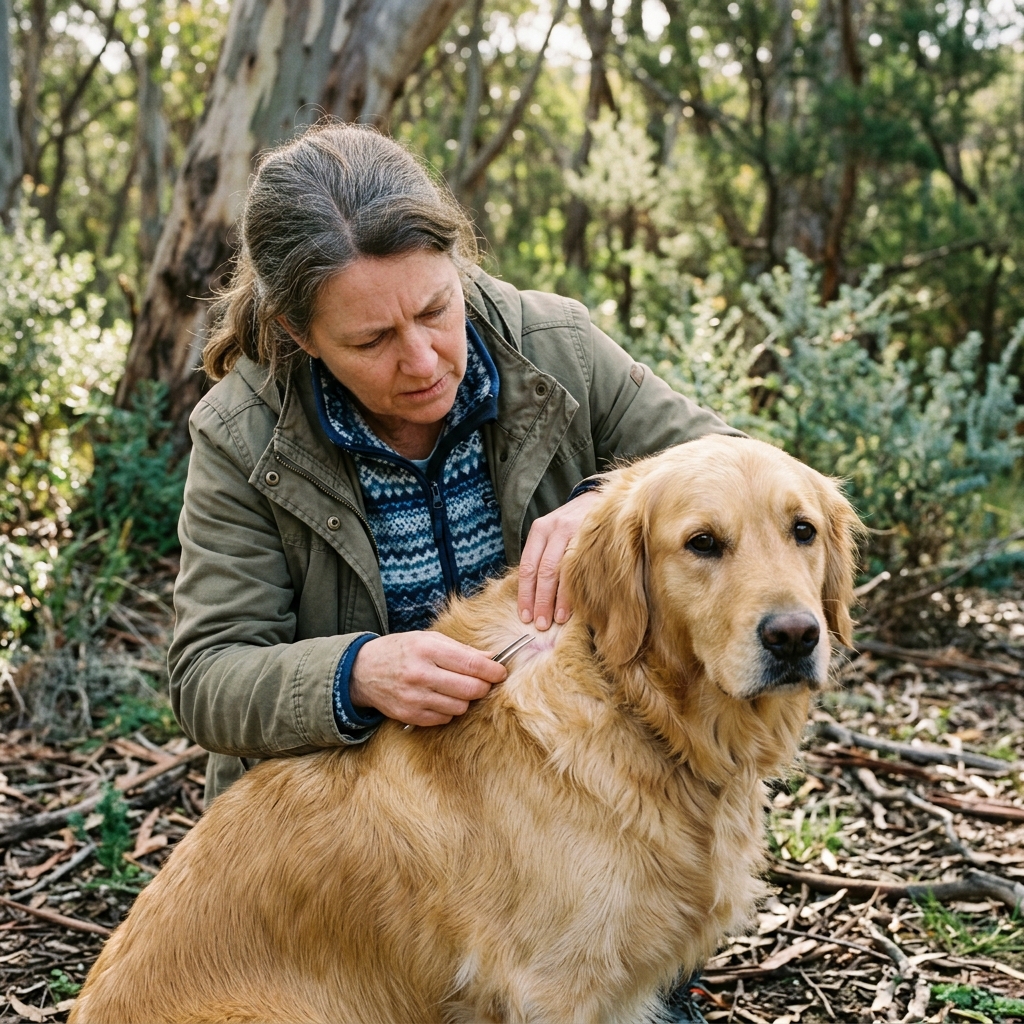
Paralysis ticks kill hundreds of dogs in Australia every year — and dog parks, with their long grass edges and native vegetation, are one of the highest-risk environments. This guide tells you everything you need to know about tick safety at dog parks.
Which Dog Parks Are High Risk?
Not all dog parks carry equal tick risk. The highest-risk areas are:
- Eastern coastal states: QLD, NSW, and VIC coastal regions (especially within 20km of the coast) have the highest paralysis tick density in Australia
- Parks with bush edges: Off-leash areas that border native bush, long grass, or creek vegetation are significantly higher risk than open, mown parks
- Warm, humid months: Peak tick season is September–March in eastern Australia, though ticks are active year-round in QLD
- After rain: Tick activity spikes after wet weather as vegetation becomes lush and humid
Tick Prevention for Dog Park Visits
1. Use a Veterinary-Approved Tick Prevention Product
This is your single most important defence. Options include:
- Oral chewables: Bravecto (lasts 3 months), NexGard (monthly), Simparica (monthly) — highly effective and easy to administer
- Topical spot-ons: Frontline Plus, Advantix — applied to the skin monthly
- Tick collars: Seresto — provides 8 months of protection
Always use products specifically labelled for paralysis tick prevention in Australia. Ask your vet which is most appropriate for your dog's size, age, and health.
2. Do a Full Tick Check After Every Park Visit
Even with prevention products, always check your dog thoroughly after park visits in tick-prone areas:
- Run your fingers slowly through the entire coat, feeling for small bumps
- Pay extra attention to: head, ears, face, neck, between the toes, groin, and under the collar
- Ticks are often found where the skin is thin and blood vessels are close to the surface
- A tick on the move hasn't attached yet and poses less risk — remove immediately
- An engorged, grey-bodied tick has been feeding — this is the dangerous stage
3. Stick to Mown Areas
Ticks wait in vegetation (a behaviour called "questing") and attach to passing animals. Keeping your dog in open, short-grass areas significantly reduces exposure compared to letting them explore bushy edges.
How to Remove a Tick Safely
Incorrect removal can make tick paralysis worse by squeezing toxins into your dog.
- Do NOT: Squeeze, twist, burn, or apply petroleum jelly to the tick
- DO: Use a tick twister or fine-pointed tweezers to grasp the tick as close to the skin as possible and pull straight out with steady pressure
- After removal: Save the tick in a jar or zip-lock bag — your vet may want to identify the species
- Monitor closely: Watch for wobbling, weakness, or vomiting in the 24–48 hours after removal
Signs of Tick Paralysis in Dogs
Symptoms typically appear 3–5 days after a tick attaches. Progress from mild to life-threatening:
- Early: Change in bark sound, slight wobble in hindquarters, reduced activity
- Middle: Weakness in back legs spreading to front legs, retching or vomiting, reduced appetite
- Severe: Unable to walk, laboured breathing, paralysis
If you notice any of these symptoms — especially within a week of a park visit — go to a vet immediately. Tick paralysis is treatable but time-critical.
Frequently Asked Questions
What are paralysis ticks and where are they found in Australia?
Paralysis ticks (Ixodes holocyclus) are found along the eastern coast of Australia from North Queensland to eastern Victoria. They inject a toxin that causes progressive paralysis. Dog parks in coastal QLD, NSW, and VIC — particularly those with bush edges — carry the highest risk.
How do I check my dog for ticks after a park visit?
Run your fingers slowly through your dog's entire coat, feeling for small bumps. Focus on the head, ears, neck, face, between toes, groin, and under the collar. Ticks are often found where the skin is thin. Do this check within 30 minutes of returning from a high-risk park.
What tick prevention is best for dogs in Australia?
Veterinary-approved oral chewables (Bravecto, NexGard, Simparica) provide the most reliable protection against paralysis ticks. Always use a product specifically labelled for Australian paralysis tick prevention, and consult your vet for the right product for your dog.
My dog is wobbling after a park visit. What should I do?
Go to an emergency vet immediately. Wobbling or hindquarter weakness after a park visit is a classic sign of tick paralysis. Do not wait — this condition worsens rapidly and is life-threatening without treatment. Remove any tick you find before travelling to the vet.
For more safety guides, see our summer dog park safety guide and dog park rules guide. Find low-risk dog parks near you.
Last updated: April 2026. Always consult your veterinarian for personalised tick prevention advice.
🔗 Helpful Resources: For more information, visit RSPCA tick prevention and Australian Veterinary Association.
Related Safety Guides: