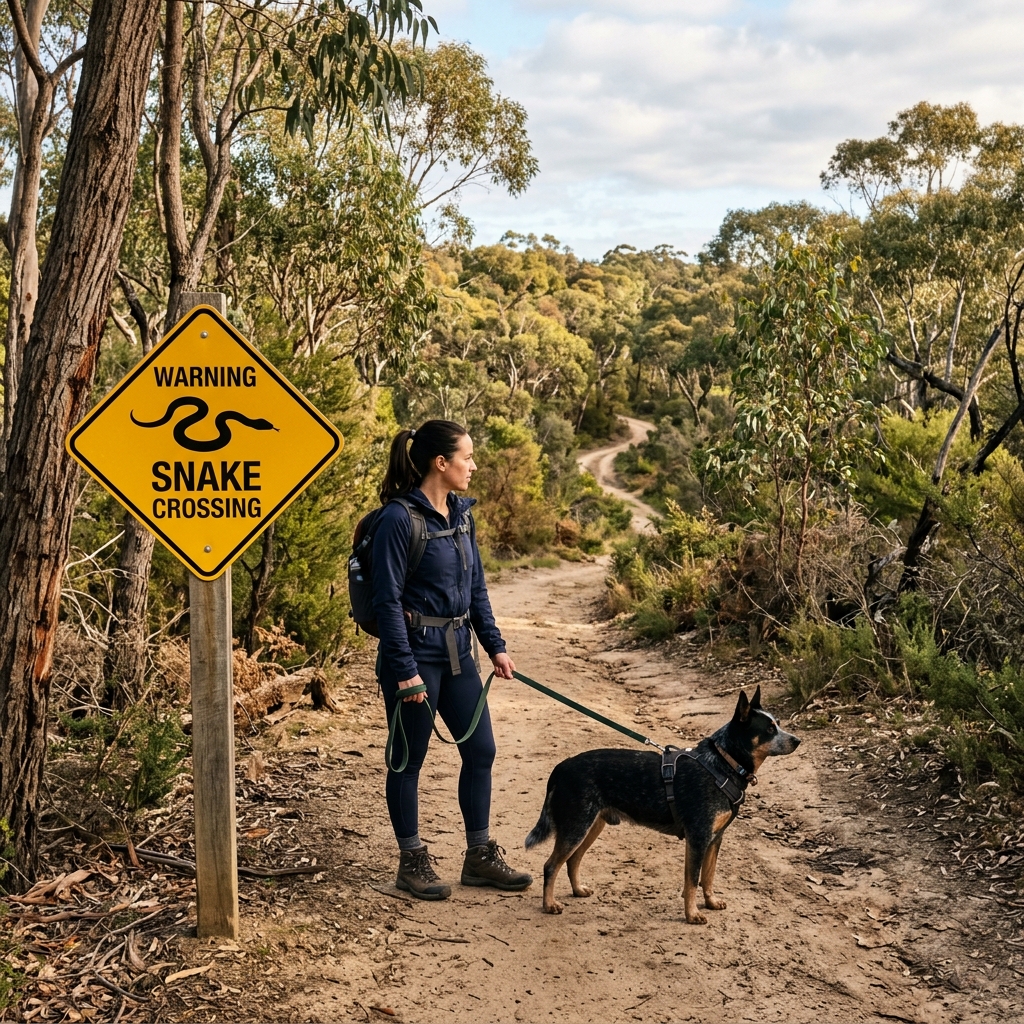
Australia is home to 7 of the world's 10 most venomous snakes — and many of them live in or near the bushland edges of dog parks. Snake bites are a genuine and underappreciated risk for dogs in Australia, particularly in spring and summer. This guide covers everything you need to know about snake safety at dog parks.
Which Dog Parks Carry Snake Risk?
Not all parks carry equal snake risk. The highest-risk environments are:
- Parks with creek corridors: Waterways and moist vegetation are prime snake habitat
- Unmown grass edges: Long grass along fence lines and park perimeters where snakes shelter
- Rocky outcrops: Snakes bask on warm rocks and are easily disturbed by an inquisitive dog
- After winter: Snake activity surges in September–October as temperatures warm. This is when most dog bite incidents occur
- All mainland states: Eastern browns, red-bellied blacks, tiger snakes, and copperheads all have range that includes suburban parks
State-by-State Snake Risk
- NSW/ACT: Eastern brown snake and red-bellied black are the main risks. Both are common in suburban areas
- Victoria: Tiger snakes and copperheads are common in Melbourne's outer suburbs and creek corridors
- Queensland: Eastern brown and coastal taipan are present. QLD parks carry risk year-round due to warm temperatures
- SA/WA: Eastern and western brown snakes. WA dugites are also highly venomous
- Tasmania: Tiger snakes only — but Tasmania has a very high tiger snake density
Prevention: Reducing Snake Risk at Dog Parks
Keep Your Dog on the Path
The vast majority of dog-snake encounters happen when dogs investigate grass edges, log piles, or rocky areas. Keep your dog on open, mown areas and call them away from any dense vegetation.
Use a Recall Command
A reliable recall is your most important safety tool at high-risk parks. If your dog spots a snake, a solid "come" command could save their life. Practice recall in lower-stakes situations before relying on it in the park.
Avoid Dawn and Dusk
Snakes are most active in the early morning and late afternoon — exactly when many dog owners visit parks to avoid summer heat. In high-risk areas during spring and summer, consider visiting in the middle of the day when snakes are less active (though never in extreme heat).
Visit Mown, Open Parks
Fully fenced, well-maintained urban dog parks with short grass are significantly lower risk than parks adjacent to bushland. Use our dog park directory to find well-maintained parks near you.
What to Do If Your Dog Is Bitten
- Stay calm. Panic causes your dog to move more, spreading venom faster
- Do NOT cut, suck, or apply a tourniquet. These methods are ineffective and cause additional harm
- Immobilise your dog. Carry them rather than letting them walk to the car
- Note the snake's appearance if you can safely do so — colour, pattern, size. This helps vets identify the correct antivenom. Do NOT try to catch or kill the snake
- Drive directly to the nearest emergency vet. Call ahead so they can prepare antivenom
- Watch for symptoms: Sudden collapse then apparent recovery, vomiting, trembling, dilated pupils, weakness, and paralysis can all follow a snake bite
Symptoms of Snake Bite in Dogs
Snake bite symptoms in dogs can be delayed by up to 24 hours, but often progress rapidly:
- Sudden collapse followed by apparent recovery (this is a classic eastern brown pattern — do not be deceived)
- Vomiting and/or drooling
- Weakness, trembling, paralysis beginning in hindquarters
- Dilated pupils, pale gums
- Blood in urine
Frequently Asked Questions
What snakes are found at Australian dog parks?
Eastern brown snakes, red-bellied black snakes, tiger snakes, copperheads, and dugites are the most commonly encountered species near Australian suburban dog parks. All are venomous and potentially fatal to dogs. Eastern browns are responsible for the most dog fatalities.
What should I do if I see a snake at a dog park?
Calmly leash your dog and move away from the snake without sudden movements. Keep your eyes on the snake's position. Report the sighting to your local council or the park authority so they can post warnings. Do not attempt to move or kill the snake.
When is snake season at Australian dog parks?
Peak snake activity is September through April across most of Australia as temperatures warm. In Queensland, snakes are active year-round. The highest-risk period for dog-snake encounters is September–November when snakes emerge hungry from winter and dogs are active in warming weather.
Can dogs survive a snake bite in Australia?
Yes — with prompt veterinary treatment, many dogs survive snake bites. Antivenom is available for all major Australian snake species. The key factors are speed of treatment and the species of snake. Always treat a suspected snake bite as a veterinary emergency.
See also: Summer dog park safety · Tick prevention at dog parks · Find safe parks near you
Last updated: April 2026. If your dog has been bitten by a snake, go to an emergency vet immediately — do not use this article as a substitute for veterinary advice.
🔗 Helpful Resources: For more information, visit Australian Wildlife Conservancy and RSPCA Australia emergency care.
Related Safety Guides: