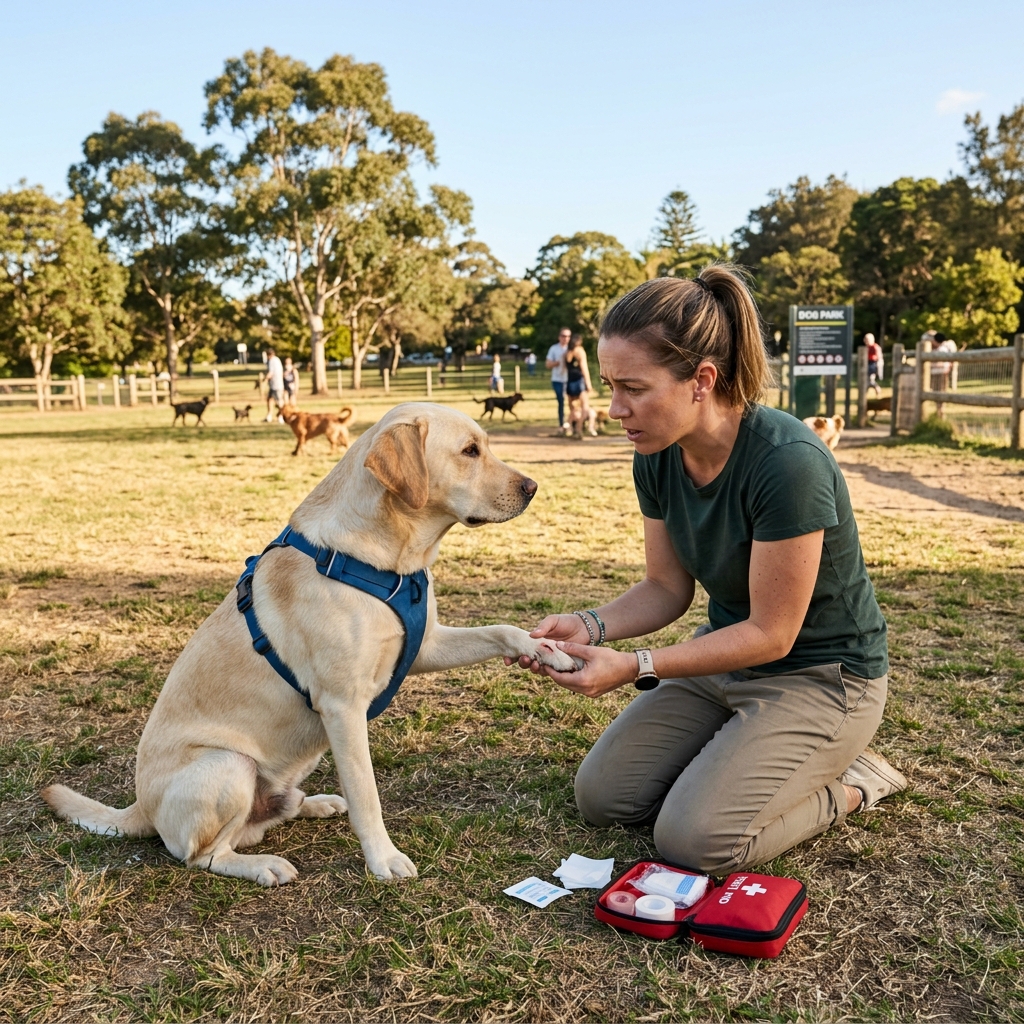
Dog parks are generally safe, happy places — but emergencies do happen. Knowing basic dog park first aid could save your dog's life. This guide covers the most common dog park emergencies and exactly what to do.
Dog Fight: What to Do
Dog fights are the most common serious incident at dog parks. Even minor-looking fights can cause puncture wounds that become infected.
During the Fight
- Never put your hands near the dogs' mouths — redirected bites are a leading cause of human injury in dog fights
- Make a loud noise: Clap, shout, or use an air horn if available
- Use a distraction: Throw water, a jacket, or a bag between the dogs
- Wheelbarrow method: If safe, two people grab each dog's hind legs and pull them backwards simultaneously, breaking the grip
After the Fight
- Separate dogs immediately — adrenaline is high and re-engagement can happen
- Check your dog for wounds, even through thick fur. Part the coat and look at the skin
- Puncture wounds often look minor but go deep — always see a vet same-day after a bite
- Collect the other owner's contact details and vaccination records if possible
Heatstroke
Heatstroke is a rapidly progressing emergency. Dogs cannot sweat and rely on panting — on hot, humid days this is insufficient.
Signs of heatstroke: Excessive panting, drooling, red or pale gums, stumbling, vomiting, collapse, seizure
What to Do
- Move your dog to shade immediately
- Apply cool (not ice cold) water to paws, belly, and groin — not the head
- Offer small sips of cool water if your dog is conscious
- Use a wet towel or pour water over them — do NOT wrap them in it (traps heat)
- Get to a vet immediately even if the dog appears to recover — internal damage can continue
Suspected Snake Bite
See our full snake safety guide. In summary:
- Keep your dog still and calm — movement spreads venom
- Carry them to the car (do not let them walk)
- Drive directly to an emergency vet — call ahead
- Do NOT cut, suck or apply a tourniquet
Cuts and Paw Injuries
Broken glass, sharp sticks, and rough surfaces can cut paw pads.
- Rinse the wound with clean water
- Apply gentle pressure with a clean cloth to stop bleeding
- If bleeding does not stop in 5 minutes or the cut is deep, go to the vet
- Wrap loosely with a bandage or clean cloth for the trip home
- Check between toes as well — grass seeds can puncture and migrate under the skin
Allergic Reactions
Bee stings, ant bites, and plant contact can trigger allergic reactions in dogs.
Mild reaction: Swelling, hives, scratching at the face. Monitor closely, contact your vet
Severe reaction (anaphylaxis): Facial swelling, vomiting, difficulty breathing, collapse. This is a life-threatening emergency — go to the vet immediately
Dog Park First Aid Kit Checklist
- ✅ Vet's number + nearest emergency vet number (saved in phone)
- ✅ Spare lead and slip lead
- ✅ Clean cloths or gauze pads
- ✅ Portable water bottle and bowl
- ✅ Tick twister
- ✅ Saline solution (wound rinse)
Frequently Asked Questions
What should I do if my dog gets into a fight at a dog park?
Never put your hands near the dogs' mouths. Use noise or water to distract them. Once separated, check your dog thoroughly for puncture wounds — these often look minor but go deep and always require same-day veterinary attention.
How do I know if my dog has heatstroke at the park?
Signs include excessive panting, drooling, stumbling, red or pale gums, vomiting, and collapse. Move your dog to shade, apply cool water to paws and belly, and go to a vet immediately — even if they seem to recover.
My dog was stung by a bee at the park. What do I do?
Remove the stinger by scraping (not squeezing) it with a card or fingernail. Apply a cold compress to reduce swelling. Monitor for signs of allergic reaction — facial swelling, vomiting, or difficulty breathing require immediate veterinary attention.
See also: Summer safety · Snake safety · Tick prevention
Last updated: April 2026. This guide is for general information only. Always consult a veterinarian in an emergency.
🔗 Helpful Resources: For more information, visit RSPCA Australia pet care and Australian Veterinary Association.