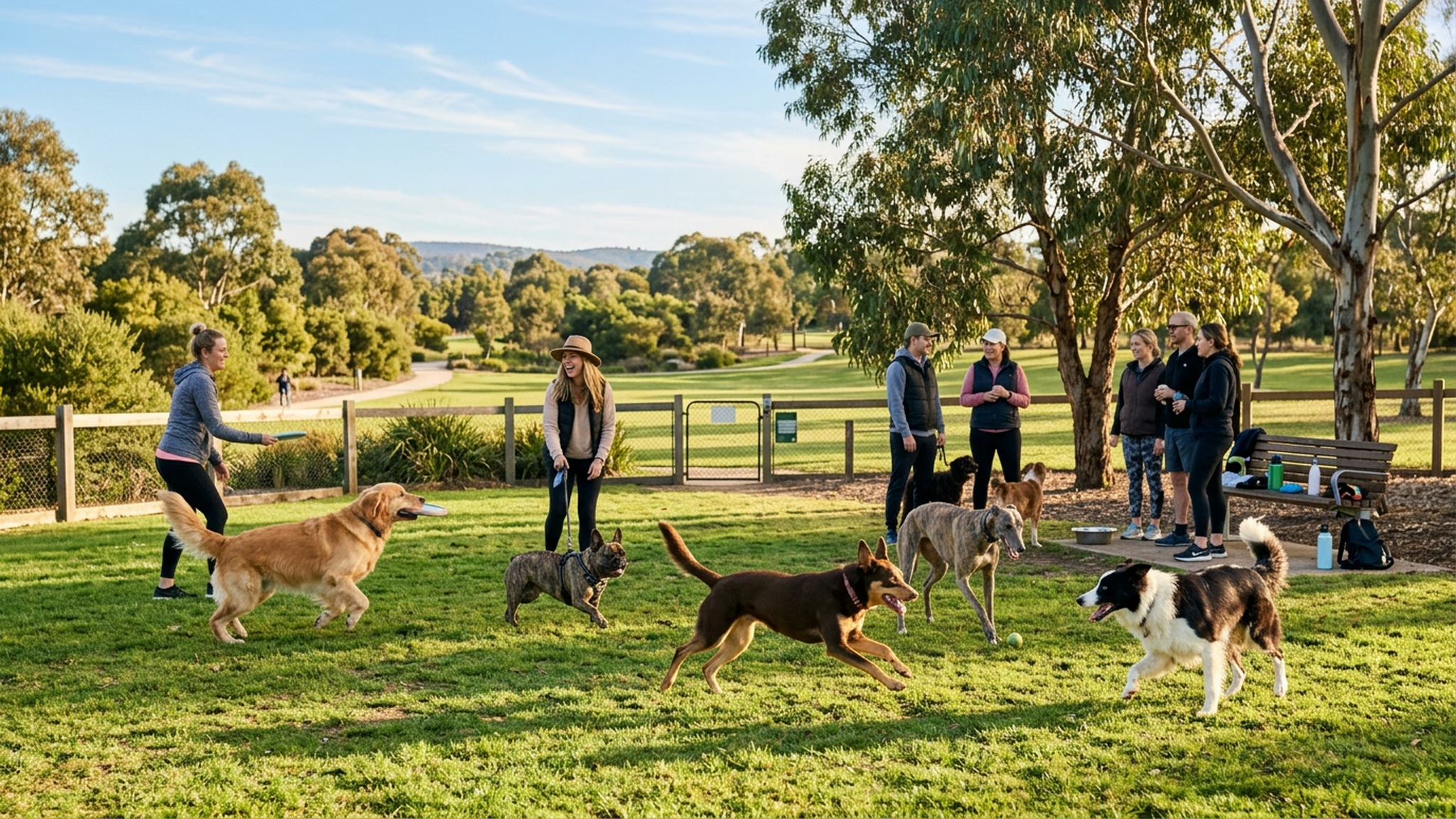
Finding an off-leash dog park near you should be simple. But if you've ever Googled it, you know the results are often outdated, inaccurate, or missing entirely.
We built Dog Park Finder to fix that. This guide helps you find the best off-leash areas in your part of Australia — and gives you the tools to pick the right one for your dog.
Find Off-Leash Dog Parks Near You
The fastest way to find off-leash parks near your location:
- Search the dog park directory — browse thousands of off-leash parks across Australia, filterable by state, city, and features
- Use the full map view — see every listed park on an interactive map and find what's closest to you
- Browse by city — jump straight to parks in Melbourne, Sydney, Brisbane, Perth, Adelaide, or Canberra
What to Look for in an Off-Leash Dog Park
Not all off-leash areas are created equal. Here's what separates a great park from an average one:
1. Fencing quality
A fully fenced park with a double-gate entry system is the gold standard. Double gates prevent dogs from bolting when the gate opens — essential for escape artists and dogs with unreliable recall.
If your dog is still learning recall or tends to chase, a fenced park is non-negotiable.
2. Separate areas for different sizes
The best parks have separate enclosures for large and small dogs. A Chihuahua and a Great Dane in the same space can end badly, even with the best intentions. Look for parks that provide this separation.
3. Water access
Dog drinking stations, taps, or fountains make a huge difference, especially in an Australian summer. Carry your own water as backup — stations can be out of service.
4. Shade and shelter
Mature trees, shade sails, or covered shelters protect dogs and owners from sun and rain. Parks without shade become unusable in summer.
5. Clean waste facilities
Bag dispensers and maintained rubbish bins keep the park clean. A park without bins quickly becomes unpleasant.
6. Parking
A dedicated car park or reliable street parking makes regular visits practical. Some of the best parks in Australia are let down by terrible parking.
Types of Off-Leash Areas in Australia
Australian councils designate several types of off-leash areas:
| Type | Fenced | Best For |
|---|---|---|
| Purpose-built fenced dog park | Yes | All dogs, especially those learning recall |
| Designated off-leash reserve | No | Dogs with reliable recall, longer walks |
| Off-leash beach section | No | Water-loving dogs, swimming |
| Time-restricted off-leash zone | No | Flexible schedules, early morning walkers |
Best Off-Leash Parks by City
We've written detailed guides for the major cities:
- Best off-leash parks in Melbourne — including KCC Park, Ruffey Lake, and Elsternwick Park
- Best dog parks in Sydney — from Centennial Park to the Northern Beaches
- Best dog parks in Perth — Kingsway, Tomato Lake, and Perth's best dog beaches
- Best dog parks in Canberra — from O'Connor to Pine Island
Off-Leash Dog Park Rules in Australia
Every state and territory has its own legislation, but the core rules are consistent across Australia:
- Dogs must be under effective control at all times, even in off-leash areas
- Owners must carry bags and clean up after their dog
- Dogs must be registered with the local council
- Aggressive behaviour means the dog must be removed immediately
- Dogs in season (on heat) are not permitted in off-leash areas
- Children must be supervised in off-leash areas
"Effective control" means your dog must respond to your commands. If you're calling and they're ignoring you, that's not effective control — regardless of whether the area is off-leash. For more on this, read our dog park etiquette guide.
Tips for Your First Off-Leash Visit
Start with a fenced park
If your dog hasn't been off-leash before (or you haven't tested their recall in a new environment), start at a fully fenced park. It removes the risk of bolting while you build confidence.
Visit during quiet hours first
Weekday mornings (9am to 11am) are generally the quietest at most parks. A low-pressure first visit helps your dog form a positive association.
Bring treats and water
High-value treats strengthen recall in distracting environments. And always carry water — even if the park has a drinking station.
Know the signs of trouble
If your dog is pinning their ears, tucking their tail, or showing stiffness around other dogs, it's time to leave. Not every dog is ready for off-leash socialisation. That's normal.
For puppies, read our guide to socialising your puppy at dog parks.
Frequently Asked Questions
How do I find off-leash dog parks near me?
Use Dog Park Finder's searchable directory at dogparkfinder.com.au/listings to find off-leash dog parks near your current location. You can also use the full map view at dogparkfinder.com.au/fullmap to visually browse parks across Australia. Filter by state or city to narrow your search.
What is the difference between off-leash and on-leash dog parks?
Off-leash dog parks are designated areas where dogs can exercise without a lead, provided they remain under effective voice control. On-leash areas require dogs to be attached to a lead at all times. Both types are managed by local councils, and different areas within the same park may have different rules.
Are fenced dog parks safer than unfenced off-leash areas?
Fenced parks provide an additional safety barrier that prevents dogs from running onto roads or chasing wildlife. They are generally better for dogs still learning recall, reactive dogs, and smaller breeds. However, both fenced and unfenced areas require supervision and responsible ownership.
What should I look for in a good off-leash dog park?
Key features to look for include: fencing quality and double-gate entry, separate areas for large and small dogs, shade and shelter, water access for dogs, clean waste disposal facilities, adequate parking, and well-maintained grass or surfaces. The best parks also have good community atmosphere and regular council maintenance.
Find off-leash dog parks near you →
Dog Park Finder is free to use, proudly supported by Pawbella — an Aussie family business making premium pet gear from Melbourne's Yarra Valley.
Last updated: March 2026