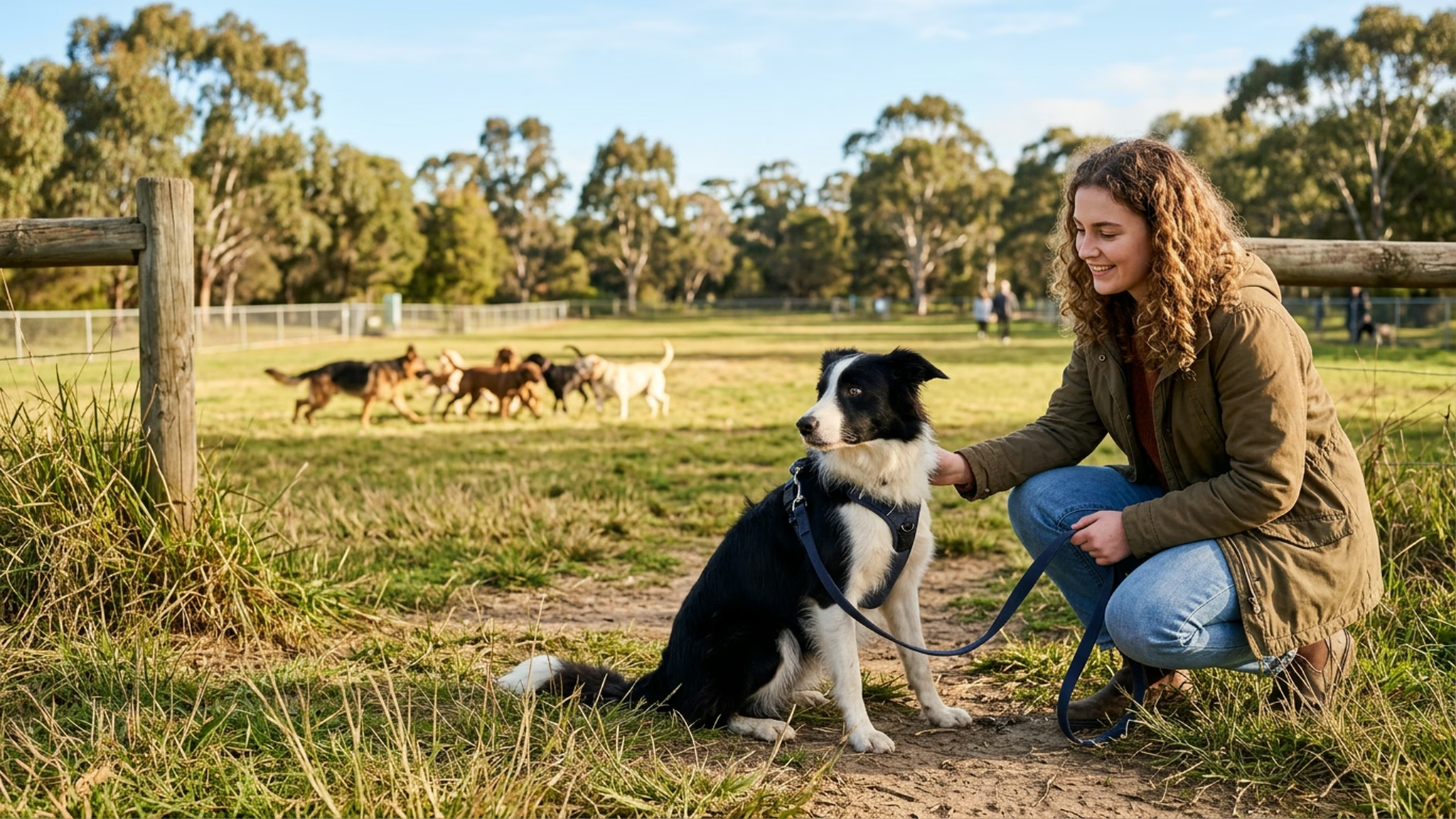
Owning a reactive dog can feel isolating — especially when you see other people's dogs happily charging around dog parks without a care in the world. But reactive dogs absolutely can enjoy park visits with the right approach, the right park, and realistic expectations.
This guide is for owners of reactive dogs at the dog park who want to safely introduce park visits — or who are trying to understand whether a dog park is the right environment for their dog.
What Is Dog Reactivity?
Reactivity is a dog's over-response to a stimulus — typically other dogs, people, or fast movement. It usually looks like barking, lunging, growling, or fixating. Reactivity is not aggression, and most reactive dogs are anxious or frustrated rather than dangerous.
Common causes of reactivity include:
- Fear — negative experiences with other dogs during the socialisation window
- Barrier frustration — dogs who are excited but restrained, causing frustation that builds into reactivity over time
- Inadequate puppy socialisation — dogs who missed the critical window for positive dog interactions
- Genetics and breed predisposition — some breeds are naturally more reactive
- Pain or discomfort — dogs in pain may react more readily; always rule out medical causes first
Is a Dog Park Right for My Reactive Dog?
Honest answer: not always. Dog parks are high-stimulation, unpredictable environments that can be overwhelming even for non-reactive dogs. For reactive dogs, they present additional challenges:
- Off-leash dogs may rush up to your dog without warning — a major trigger for many reactive dogs
- Poor social skills in other dogs can provoke reactions in yours
- You cannot always control the environment or other owners
However, dog parks can be appropriate for reactive dogs who are:
- Reactive when on-leash but calmer when off-leash (barrier frustration type)
- Reactive to specific triggers that can be managed (e.g., intact males, dogs of a certain size)
- Mildly reactive with good recovery time after a trigger
For severely reactive dogs or dogs with a bite history, work with a qualified dog behaviourist before attempting park visits.
Choosing the Right Park for a Reactive Dog
Park selection is critical. Look for:
- Fencing — a secure fence means you can let your dog off-leash safely without worrying about escape
- Separate small dog section — if your dog is reactive to large dogs, a small dog section gives more control
- Double-gate airlock entry — prevents uncontrolled dog-to-dog contact at the gate
- Multiple entry/exit points — allows you to leave quickly if needed
- Quiet times — visit mid-week mornings (9–11am) when parks are less busy
Use our directory to find fenced dog parks near you.
How to Introduce a Reactive Dog to a Dog Park
Go slow. Much slower than feels necessary. Here's a step-by-step approach:
Step 1: Observe from outside
On your first visit, don't enter. Stand outside the fence at a distance where your dog can see the park but isn't over-threshold (still able to take treats and respond to you). Let your dog observe. Reward calm, neutral body language. Leave on a positive note.
Step 2: Enter during an empty park
Visit when the park is empty — early weekday mornings are best. Let your dog off-leash to explore the space freely. The goal is building positive associations with the park environment itself, not dog-to-dog socialisation yet.
Step 3: Brief, controlled visits
Once your dog is comfortable in the park, start with very short visits (5-10 minutes) when only 1-2 calm dogs are present. Watch your dog's body language constantly. Leave before your dog shows signs of stress.
Step 4: Gradual exposure
Gradually increase the duration and the number of dogs present as your dog becomes more comfortable. Always watch for early stress signals and leave before reactivity occurs — ending on a good note is essential.
Reading Stress Signals in Your Dog
Know when to leave. Early stress signals to watch for:
| Signal | What It Means |
|---|---|
| Whale eye (showing whites of eyes) | Stress, discomfort |
| Lip licking / yawning | Early stress signal — often missed |
| Stiff, still body | Freeze response — precursor to reaction |
| Tail tucked low | Anxiety, fear |
| Hiding behind you | Seeking safety — time to leave |
| Refusing treats | Over-threshold — leave immediately |
Leave as soon as you see 2+ early signals. Do not wait for a full reaction — by the time barking and lunging happen, your dog's stress hormone levels are elevated and will take hours to return to baseline.
Dog Park Etiquette for Reactive Dog Owners
- Inform other owners: A simple "my dog is still learning" helps set expectations.
- Don't apologise excessively: It raises your own anxiety, which dogs notice.
- Advocate for your dog: If an off-leash dog is harassing yours, politely but firmly ask the owner to recall them.
- Have an exit strategy: Know where the gates are. Leave before your dog reacts, not after.
- Consider a basket muzzle: A properly fitted basket muzzle lets your dog pant and take treats while giving you peace of mind. Train the muzzle at home first.
Frequently Asked Questions
Are dog parks suitable for reactive dogs?
Dog parks can work for mildly reactive dogs with the right preparation. Choose a fenced park, visit during quiet times, and always have an exit plan. For severely reactive dogs, consult a professional trainer before attempting dog park visits.
What causes dog reactivity?
Reactivity is usually fear, frustration, or over-excitement that a dog cannot regulate. Common triggers include other dogs approaching too quickly, being on-leash (barrier frustration), past negative experiences, inadequate socialisation as a puppy, or pain. Reactivity is not aggression — most reactive dogs are anxious, not dangerous.
How do I introduce a reactive dog to a dog park?
Start by visiting the park without entering — let your dog observe from outside the fence. Next, enter during an empty park period. Keep initial sessions short (5-10 minutes). Leave before your dog becomes overwhelmed. Gradually build duration as confidence improves.
Should I use a muzzle for my reactive dog at the park?
A basket muzzle is a responsible choice for reactive dogs at dog parks. It allows your dog to pant, drink, and take treats while preventing bites. Train the muzzle at home first — your dog should be comfortable wearing it before you visit the park.
Breeds More Prone to Reactivity at Dog Parks
Any dog can develop reactivity, but some breeds have instincts that make dog parks more challenging. Understanding your breed helps set realistic expectations:
| Breed / Type | Common Trigger | Park Strategy |
|---|---|---|
| Border Collies, Kelpies | Fast movement, herding instinct | Off-peak visits, fenced parks |
| Greyhounds, Whippets | Prey drive, sight stimulation | Always requires secure fencing |
| Rescue dogs | Unpredictable; depends on history | Slow introduction, trainer support |
| Terriers | Same-sex dog conflict | Monitor interactions closely |
| Huskies, Malamutes | High arousal, selective with dogs | Neutral introduction pace |
None of these breeds are disqualified from dog parks. They just require owners who understand their instincts and can manage exposures appropriately.
Training Tools That Help Reactive Dogs at Parks
The right equipment makes a significant difference when working with a reactive dog in public spaces:
- Long line (5–10m) — allows your dog more freedom while you maintain control. Ideal for the transition phase before full off-leash trust is established.
- Basket muzzle — for dogs with bite history or significant reactivity. A properly fitted basket muzzle allows panting, drinking, and treat intake. Muzzle train at home over 2–3 weeks before introducing it at the park.
- High-value treats — use treats your dog only gets at the park: cooked chicken, cheese, freeze-dried liver. The stakes need to be high enough to compete with arousal from other dogs.
- Treat pouch — keep rewards accessible at all times. Fumbling with a bag when your dog needs a redirect in the moment is too slow.
- Harness with front-clip — reduces pulling during on-leash portions of the visit; gives you better directional control if your dog lunges.
Managing Other Owners When You Have a Reactive Dog
One of the hardest parts of bringing a reactive dog to a park isn't the dogs — it's other owners. The classic situation: an off-leash dog charges your reactive dog while the owner calls out "It's okay, he's friendly!" from 20 metres away.
How to handle it:
- Stay calm and assertive: Step between the dogs and say clearly: "Please call your dog, mine is in training." Most owners will comply when spoken to directly and calmly.
- Create space physically: Turn your dog and walk away from the approaching dog. Put your body between the dogs to block visual contact.
- Don't over-explain: You don't owe other owners your dog's full behavioural history. "He's working with a trainer" is enough.
- Know your exit: If you feel a situation escalating and the owner isn't cooperating, leave. There will be other park visits. Protecting your dog's emotional state is the priority.
- Acknowledge your dog: After a stressful interaction, give your dog space to decompress — sniffing, wandering, or just sitting quietly with you.
How to Track Your Reactive Dog's Progress
One of the most encouraging parts of working with a reactive dog is seeing gradual improvement. Here's how to track meaningful progress over weeks and months:
- Threshold distance decreasing: Your dog used to react at 20m from other dogs — now it's 10m. That's progress.
- Recovery time shortening: After a trigger, your dog used to stay aroused for 30 minutes. Now it's 5. That's significant improvement.
- Intensity reducing: Barking and lunging is becoming a single bark and then redirecting to you. Progress.
- Duration increasing: You could only handle 5-minute park visits initially — now you're comfortably doing 20 minutes without incident.
Keep a simple log — even just a note on your phone after each visit. "Tuesday 7am: 3 dogs present, stayed 15 minutes, one bark at gate, recovered quickly. Good session." Reviewing these notes over months shows patterns and progress that are easy to miss in the day-to-day.
When to Seek Professional Help
Dog parks are not the right environment for every reactive dog — at least not yet. Consider working with a qualified professional if:
- Your dog has made contact (bitten or attempted to bite) with another dog at a park
- Your dog cannot recover from triggers even after the stimulus is removed
- Reactivity is getting worse rather than staying stable or improving
- You feel unsafe or overwhelmed managing your dog in public
- Your dog is reactive to multiple triggers simultaneously
In Australia, look for trainers who use force-free methods and hold qualifications from bodies like the Pet Professional Guild Australia (PPGA) or the Delta Society. Reactive dog group classes are also an excellent structured environment — dogs learn to be calm around other dogs without direct interaction.
For more on dog park visits, read our dog park etiquette guide and tips on choosing a fenced dog park for extra security.
Last updated: March 2026